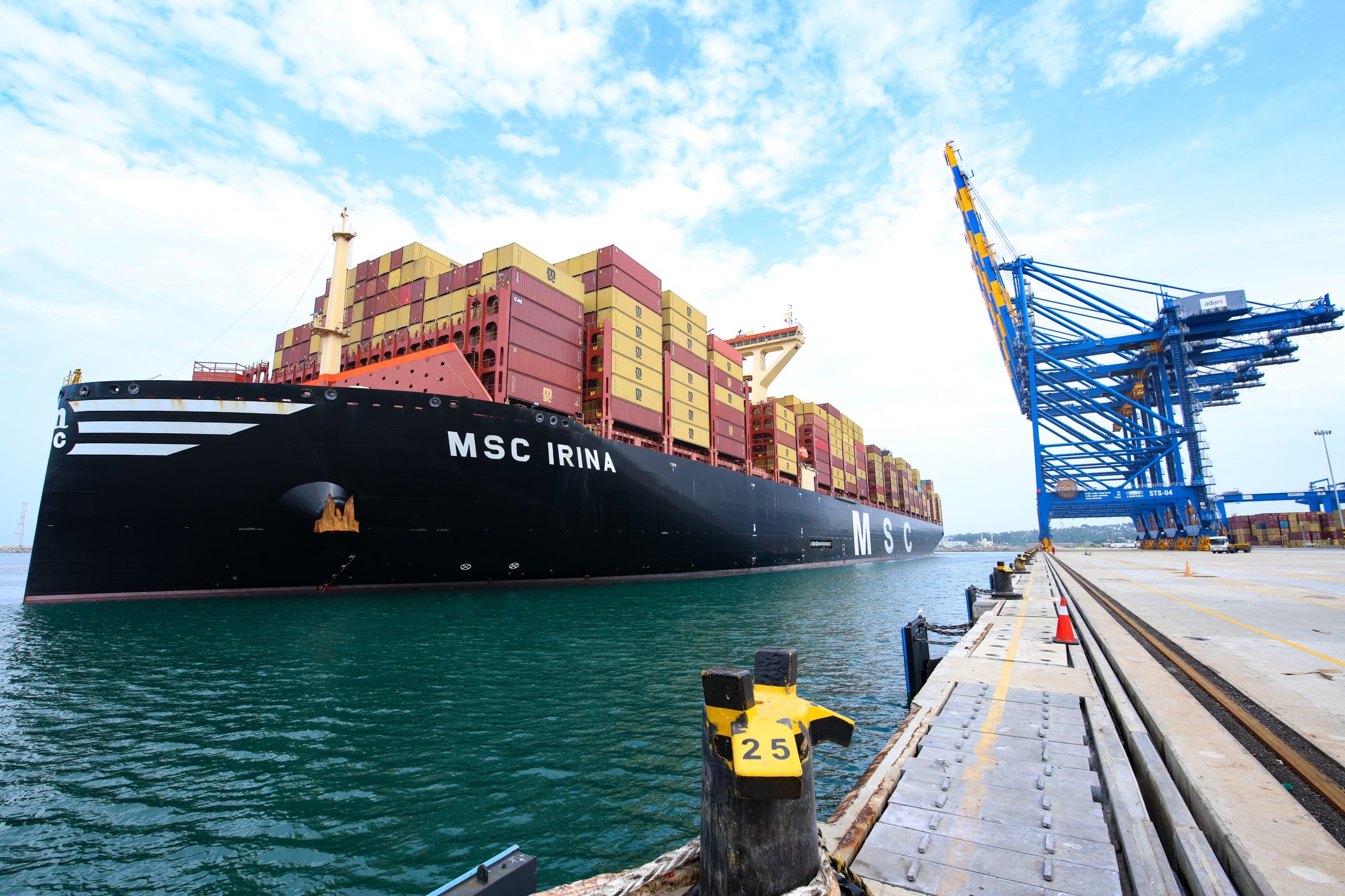
Ports are usually measured by how much cargo they handle. Their wider economic value depends on what happens to that cargo before it reaches the next market.
A container can be unloaded and immediately transferred to another ship, truck or train. It can also be opened, inspected, sorted, packaged, labelled, assembled, consolidated or processed before continuing its journey.
The second model is known as port based value addition.
Port based value addition allows importers, exporters and manufacturers to perform part of the supply chain close to a seaport. It connects international shipping, customs-controlled storage, local labour, manufacturing capacity and regional distribution in one operating network.
The work can be as simple as applying destination-market labels. It can also involve contract packing, bottling, component assembly, product testing or full-scale manufacturing inside an authorised economic zone.
For ports, this creates employment and industrial activity beyond cargo handling. For businesses, it can reduce transport costs, simplify regional distribution and delay final product configuration until market demand is clearer.
What is port based value addition?
Port based value addition means performing a service or transformation on cargo at, within or near a seaport before the goods are delivered, distributed or re-exported.
Common operations include:
Packaging and repackaging
Labelling and barcoding
Kitting and bundling
Sorting and grading
Quality inspection
Product testing
Light assembly
Filling and bottling
Palletisation
Consolidation and deconsolidation
Repair and reworking
Market-specific customisation
The cargo does not necessarily need to undergo major manufacturing.
The World Customs Organization recognises that inward processing can include minor operations such as packaging, packing and repacking. It also covers contract or job processing where the foreign customer continues to own the imported goods.
Port based value addition is a commercial description rather than a single customs procedure. The legal framework may be a customs warehouse, inward-processing authorisation, free zone, bonded manufacturing scheme or another country-specific arrangement.
Port based value addition and port-centric logistics
Port based value addition is closely connected to port-centric logistics, but the two terms are not identical.
Port-centric logistics places warehousing, inventory management and distribution close to the port where cargo enters or leaves the country.
Port based value addition goes further by changing the cargo, its packaging, its configuration or its commercial readiness.
A port-centric warehouse may simply store imported products. A value-addition facility may receive those products and:
Apply the labels required by the destination market
Convert bulk shipments into retail packs
Combine components from multiple suppliers
Perform inspection and rework
Prepare country-specific product bundles
Assemble the final product
Dispatch the completed goods to different markets
UNCTAD describes ports as the interface between international shipping networks and inland commercial regions, with port-centric logistics and manufacturing forming an additional part of that interface.
Why perform value addition near a port?
The best location for a processing activity is not always the original manufacturing country or the final destination market.
A port can offer a useful intermediate point.
Reduce unnecessary inland movement
When imported cargo is processed near the port, businesses may avoid moving unfinished or poorly configured goods deep into the country and then transporting them back toward the coast.
This is particularly useful when the goods will be re-exported.
Serve multiple destination markets
The same base product may require different packaging, languages, accessories or compliance information for different countries.
Keeping products in a standard form until they reach a regional port hub allows the importer to configure them closer to actual demand.
Consolidate multiple suppliers
A finished product may contain components sourced from several manufacturers.
These components can arrive separately at a port-based facility, where they are inspected, consolidated and assembled into a final kit. This removes the need to nominate one overseas supplier to coordinate all the others.
Delay final product decisions
Demand forecasts are often wrong months before a shipment reaches the market.
A business can import a common base product and later decide:
Which country receives it
Which language appears on the label
Which accessories are included
Which retail pack size is used
Which customer branding is applied
This supply-chain approach is commonly called postponement.
Use local labour and manufacturing capabilities
A port may be close to lower-cost labour, packaging suppliers, industrial clusters or specialised processors.
The commercial advantage comes from combining these capabilities with frequent international shipping connections.
Common port based value addition services
Packaging and repackaging
Imported products may arrive in drums, sacks, intermediate containers or bulk cartons.
A contract-packing facility can convert them into retail or distribution-ready formats through:
Pouch packing
Bottle packing
Carton packing
Shrink wrapping
Protective export packaging
Retail display preparation
Palletisation
Packaging close to the port can also reduce damage caused by sending retail-ready products through long international journeys.
Labelling and market localisation
Products sold in different markets frequently require different labels.
Port-based labelling services can apply:
Importer and distributor information
Multilingual product labels
Barcodes and QR codes
Batch and serial numbers
Manufacturing and expiry dates
Country-of-origin declarations
Safety warnings
Regulatory information
Customer-specific branding
This allows a common inventory to be divided across different countries without producing separate batches at origin.
Kitting and bundling
Kitting combines multiple products or components into one unit.
Examples include:
A dispenser packed with a refill bottle
A tool combined with its accessories
Spare parts arranged into a maintenance kit
Products from several suppliers combined into a gift pack
Promotional products bundled for a retail campaign
Electronic devices packed with region-specific cables or adapters
Kitting is particularly useful when suppliers are spread across different countries or manufacturing clusters.
Light assembly and finishing
Some products require a final step before they are ready for sale.
Port based assembly can include:
Attaching handles, caps or accessories
Installing simple mechanical components
Fitting regional electrical plugs
Inserting manuals and warranty cards
Conducting functional checks
Applying protective coatings
Preparing finished retail packs
The operation must be designed around product regulations, customs treatment, quality standards and liability.
Filling and bottling
Transporting products in bulk can be more efficient than shipping finished retail units.
Depending on the product and regulatory environment, a port-based facility may handle:
Filling
Bottling
Capping
Sealing
Batch coding
Labelling
Carton packing
Potential categories include food products, edible oils, cleaning products, personal-care products and industrial liquids.
Each product class requires its own licences, hygiene standards, equipment and quality controls.
Sorting, grading and inspection
Cargo may need to be checked before it enters the final market.
Inspection and quality-control services include:
Quantity verification
Visual inspection
Sampling
Weight checks
Dimensional checks
Damage assessment
Sorting by size or grade
Defect separation
Photographic reporting
Laboratory testing
Inspection is also important before and after a transformation. It establishes the condition of the cargo and helps assign responsibility when damage or defects are discovered.
Reworking and repair
Imported goods may arrive with damaged cartons, incorrect labels, incomplete kits or minor product defects.
Sending them back to the original factory may take weeks or months. A qualified facility near the destination port may be able to:
Replace damaged packaging
Correct labels
Add missing components
Repair minor defects
Re-test products
Repack rejected inventory
Recover products that would otherwise be written off
Consolidation and deconsolidation
Port-based consolidation combines cargo from different suppliers into a single outbound shipment.
Deconsolidation separates an inbound shipment into smaller orders for different countries, customers or distribution centres.
These operations can be combined with inspection, packaging and labelling to create a complete regional fulfilment service.
Cold-chain processing
Food, seafood, pharmaceuticals and other temperature-sensitive cargo can require specialised handling close to the port.
Possible services include:
Pre-cooling
Freezing
Portioning
Grading
Temperature-controlled packing
Cold storage
Reefer monitoring
Sampling and testing
Export preparation
Cold-chain value addition requires uninterrupted temperature control, traceability and commodity-specific approvals.
Industrial waste management
Packaging, processing and product transformation can generate plastic film, cartons, pallets, damaged materials, rejected products, liquid waste and hazardous by-products.
Licensed waste-management companies are part of the value-addition ecosystem. They collect, segregate, recycle, treat or safely dispose of the waste produced during cargo processing.
The waste stream must be included in the operating plan before production begins, particularly for food, chemicals, electronics and regulated products.
Where can port based value addition take place?
The activity does not always happen inside the container terminal.
Inside the port or terminal area
Terminal-side operations may suit time-sensitive inspection, emergency repacking, cargo securing or services that do not require extensive production space.
Access, security and operating restrictions are usually strict.
Port-adjacent logistics park
A logistics park close to the port can combine warehouses, transport, container handling and processing facilities.
This is often the most practical model for packaging, kitting, labelling, fulfilment and regional distribution.
Customs-bonded warehouse
A customs warehouse generally allows imported goods to be stored under customs control without immediate payment of import duties and taxes.
The World Customs Organization states that normal authorised handling can include breaking bulk, grouping packages, sorting, grading and repacking to improve marketable quality or prepare goods for shipment.
More substantial processing may require a separate inward-processing or bonded-manufacturing authorisation.
Free zone or special economic zone
A free zone is generally treated differently from the domestic customs territory for import-duty purposes.
Depending on local law, a free-zone business may be allowed to store, package, assemble, manufacture and re-export goods. The authorised activities vary by country and zone.
Jebel Ali Free Zone, for example, offers industrial and logistics licences covering activities such as production, assembly, segregation and packaging.
Inland facility connected to the port
A factory does not need to stand beside the waterfront to participate.
An inland industrial unit may still provide port based value addition when it has:
Reliable container-road or rail access
Predictable transit time
Appropriate customs permissions
Suitable storage and handling infrastructure
Strong coordination with the port and shipping network
The correct location depends on whether speed, land cost, labour, utilities or supplier access matters most.
Customs models used for port value addition
Customs treatment is central to the commercial model.
Customs warehousing
Imported goods can be stored without immediate import-duty payment under an authorised customs warehousing procedure.
Permitted handling depends on national law and the warehouse licence.
Inward processing
Inward processing allows imported goods to enter a customs territory with conditional relief from duties and taxes when they will undergo authorised manufacturing, processing or repair and subsequently be exported.
The WCO states that inward processing can support export competitiveness, employment and contract processing. It may also apply to goods already held in a customs warehouse or free zone.
Free-zone processing
Free zones can permit storage, normal handling and, where authorised, processing or manufacturing.
The WCO framework allows activities such as sorting, grading, repacking and preparation for shipment, while more substantial manufacturing depends on the permission granted by the relevant authority.
Bonded manufacturing
Some countries operate specific bonded-manufacturing programmes.
India’s Manufacture and Other Operations in Warehouse framework, commonly known as MOOWR, allows authorised units to receive imported raw materials and capital goods without paying customs duty at the point of import. Duties are handled according to whether the resulting goods are exported or cleared into the domestic market.
MOOWR is an Indian framework, not the global definition of port based value addition. Other countries use their own free-zone, bonded-processing or inward-processing systems.
A typical port based value addition workflow
A properly managed project may follow these stages:
1. Commercial planning
The cargo owner defines:
The imported product
The required transformation
The final product specification
Destination markets
Expected volumes
Completion deadline
Customs route
Quality standards
2. Regulatory review
Customs, product and facility requirements are checked before the shipment leaves its origin.
This may involve:
Product classification
Import and export restrictions
Bonded-facility eligibility
Food or pharmaceutical licences
Labelling regulations
Environmental approvals
Country-of-origin rules
Waste-disposal requirements
3. Inbound shipment
The cargo arrives at the port and is transferred to the approved warehouse, free zone or processing facility.
Container numbers, seals, quantities and condition should be recorded.
4. Receipt and inspection
The facility checks the cargo against the commercial documents and project instructions.
Any shortage, damage or quality issue is reported before work begins.
5. Transformation
Packaging, labelling, assembly, filling, testing or another authorised operation is completed according to a documented process.
6. Quality control
The completed goods are inspected against the approved sample or product specification.
Rejected goods and waste are recorded separately.
7. Outbound preparation
The facility prepares the final packing list, labels, pallet configuration, inspection records and shipment documents.
8. Re-export or domestic clearance
The completed cargo is loaded into the outbound container and moved to the port, regional distribution centre or domestic customer according to its customs status.
Which products are suitable?
Port based value addition works best when the transformation creates meaningful savings or flexibility without requiring a highly integrated factory.
Suitable categories can include:
Consumer packaged goods
Household and cleaning products
Food and beverages
Personal-care products
Apparel and footwear
Electronics and accessories
Automotive components
Spare parts
Furniture components
Hardware and tools
Medical consumables
Promotional products
E-commerce inventory
Seafood and perishables
The model is particularly attractive when products have high packaging costs, multiple destination variants or labour-intensive finishing requirements.
When does the model create the most value?
Port based value addition is strongest when one or more of the following conditions apply:
Cargo is already passing through the selected port
The final market is reached through regular shipping services
The imported product can travel efficiently in bulk form
Packaging or assembly is labour-intensive
Several suppliers must be consolidated
The destination requires market-specific labelling
Demand varies between countries
The goods are intended for re-export
The port has suitable bonded or free-zone facilities
Local suppliers can provide packaging materials and components
The operation avoids unnecessary inland transport
The saving must be calculated across the entire supply chain. A lower labour rate alone does not make a location competitive if customs delays, additional handling or empty-container repositioning remove the benefit.
When port based value addition may not work
The model is less suitable when:
The processing facility is too far from the port
Cargo requires repeated customs movements
The operation has very low or irregular volume
Product regulations prohibit the planned activity
Quality cannot be controlled consistently
Imported goods lose preferential origin status
The transformation requires a complete industrial cluster
Packaging materials must be imported separately at high cost
The shipping route adds significant transit time
The value added is smaller than the additional logistics cost
A feasibility study should compare the port-based model with processing at origin, destination and inland industrial locations.
The service-provider network
A port value-addition project is rarely completed by one company.
The operating network may include:
Freight forwarders
Customs brokers
Shipping lines
Container transporters
Warehouses
Free-zone operators
Packaging companies
Label printers
Manufacturers
Contract packers
Inspection agencies
Testing laboratories
Equipment-rental providers
Cold-storage companies
Waste-management providers
Cargo insurers
Technology platforms
The project manager must coordinate commercial terms, documentation, cargo movement, processing and quality across this network.
The main risk is not always finding a supplier. It is ensuring that every supplier works to the same schedule and product specification.
Global port value-addition models
Different ports use different combinations of free zones, industrial parks and logistics facilities.
Mumbai Free Zone offers services including labelling, packaging, kitting, basic manufacturing and assembly, alongside customs-duty deferment until the applicable clearance stage.
London Gateway combines terminal operations with nearby warehousing, container shunting, storage and distribution. Its port-centric model is designed to reduce additional inland transport and prepare cargo close to the point of arrival.
DP World’s Caucedo operation in the Dominican Republic uses a port-adjacent logistics park and free-zone warehousing to support regional fulfilment and value-added services.
The regulations and economic conditions differ, but the commercial principle remains the same: combine port access, warehousing, customs facilitation and product preparation in one location.
Port based value addition at emerging transshipment hubs
Transshipment alone creates limited local interaction with cargo. A container may move from one vessel to another without leaving the terminal.
An emerging hub captures more economic value when some cargo also enters nearby logistics and industrial facilities.
At ports such as Vizhinjam, the opportunity is to connect mainline shipping routes with:
Packaging and labelling facilities
Warehouses and bonded units
Manufacturing clusters
Container trucking
Cold-chain operators
Inspection companies
Regional distribution
Re-export services
Vizhinjam can serve as one location within a wider network rather than being the limit of the model. The same CapeTerminal framework can eventually connect cargo owners with value-addition providers around multiple international ports.
How to choose a port for value addition
Businesses should compare ports using operational criteria rather than container volume alone.
Important factors include:
Direct shipping connections to origin and destination
Frequency of vessel services
Customs and free-zone structure
Availability of warehouses
Processing and manufacturing capacity
Labour cost and skill
Packaging-material suppliers
Road and rail connectivity
Port and terminal charges
Container availability
Regulatory predictability
Quality-control infrastructure
Re-export procedures
Time required to complete the work
A port with fewer services but better execution may be more useful than a larger port where cargo must travel far inland for processing.
Frequently asked questions
What is port based value addition?
Port based value addition is the packaging, labelling, assembly, inspection, processing or customisation of cargo at or near a seaport before domestic delivery or re-export.
What are examples of value-added services at ports?
Examples include repacking, barcoding, kitting, sorting, quality inspection, palletisation, bottling, light assembly, product testing, consolidation and destination-market labelling.
Is port based value addition the same as manufacturing?
No. It can include manufacturing, but many operations are lighter activities such as packaging, inspection, labelling or assembly.
Does value addition have to happen inside the port?
No. It can occur inside a terminal, in a port-adjacent logistics park, in a free zone, in a customs-bonded warehouse or at a connected inland factory.
Must the facility be customs bonded?
Not always. The correct structure depends on whether the goods have been customs cleared, whether they will be re-exported and which operations are planned.
Can imported goods be processed without paying customs duty first?
Many countries provide customs warehousing, free-zone or inward-processing procedures that defer or conditionally relieve import duties. The exact treatment depends on national law and the authorised operation.
What is the difference between port based value addition and transshipment?
Transshipment transfers cargo between vessels without entering the destination market. Port based value addition performs work on the cargo before it continues to another market or customer.
What is the difference between port based value addition and port-centric logistics?
Port-centric logistics places storage and distribution near the port. Port based value addition specifically changes the product, packaging, configuration or market readiness of the cargo.
Who provides port based value addition services?
Providers include warehouses, manufacturers, packaging companies, contract packers, label printers, inspection agencies, logistics companies, cold-storage operators and specialised processing facilities.
Why do companies use port based value addition?
Companies use it to reduce inland transport, delay final product configuration, serve multiple markets, consolidate suppliers and perform labour-intensive work close to international shipping routes.
Building a global port value-addition network
Port based value addition changes the role of a port from a cargo-transfer point into a production and distribution platform.
The opportunity is not limited to large manufacturers. Packaging companies, warehouses, truck operators, inspection agencies, printers, cold-storage facilities and specialised processors can all participate.
The commercial value comes from coordinating them as one supply chain.
CapeTerminal connects cargo owners with logistics, manufacturing and value-addition providers serving port-linked projects. Businesses can use the platform to find facilities, organise cargo transformation and prepare products for their final markets.
Companies that provide packaging, manufacturing, warehousing, trucking, inspection or other value-addition services can list their capabilities on CapeTerminal and become discoverable for port-based projects.