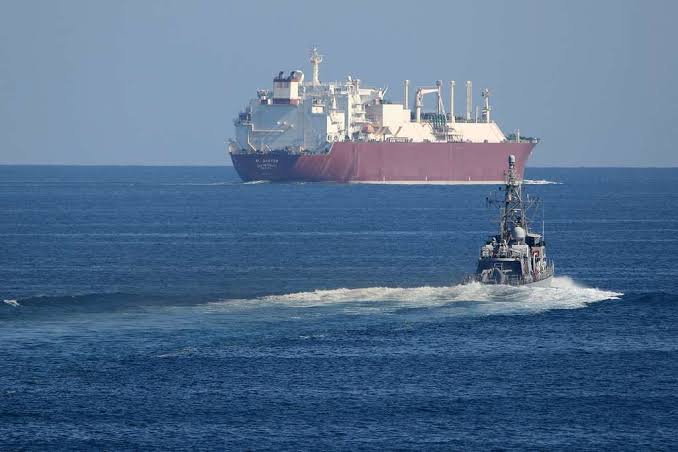
Iran and Oman have reached agreements concerning their respective shares of the waters and revenues associated with the Strait of Hormuz, according to Iran’s Islamic Revolutionary Guard Corps (IRGC). The announcement marks a potentially important development in efforts to establish a new framework for maritime traffic through one of the world’s most strategically important shipping corridors.
However, the reported agreement should not be interpreted as confirmation that the Strait of Hormuz has reopened.
The IRGC statement, reported by Reuters and other international media, said negotiations between Iran and Oman had produced an understanding on each country’s share of the Strait and its revenues. It did not provide details on how revenues would be collected or divided. Oman has also not publicly confirmed the specific revenue-sharing arrangement.
This distinction is important because separate discussions between the two countries have focused on a broader interim framework for restoring safe navigation.
A temporary shipping corridor is also being discussed
Iran and Oman have been working on an interim arrangement that would establish a temporary joint maritime corridor through the Strait while technical discussions continue on a longer-term system.
According to reporting based on statements from the two governments, the framework includes cooperation on mine clearance and the establishment of a temporary corridor for shipping. Further negotiations are expected to address the permanent maritime route, traffic management, information exchange, and maritime and security services.
Iranian officials have also described a proposed route that would enter through Iranian territorial waters, with part of the outbound route passing through both Iranian and Omani waters. The exact operational arrangements, including the precise route and conditions for vessel access, remain subject to further negotiations.
For shipping companies, this means the immediate question is not simply whether Iran and Oman have agreed on revenue sharing. The more important question is whether the two countries, alongside other parties involved in the wider dispute, can establish conditions that allow commercial vessels to navigate the Strait safely and predictably.
Why the Strait matters to global trade
The Strait of Hormuz connects the Persian Gulf with the Gulf of Oman and the Arabian Sea. Its importance extends far beyond the countries immediately surrounding it.
According to the U.S. Energy Information Administration, approximately 20.9 million barrels per day of petroleum liquids moved through the Strait during the first half of 2025, equivalent to about one-fifth of global petroleum liquids consumption. More than 20% of global LNG trade also passed through the waterway during the same period.
The route is particularly important for Asian energy markets. The EIA estimates that 89% of crude oil and condensate moving through Hormuz in the first half of 2025 was destined for Asian markets, with China, India, Japan and South Korea accounting for a large share of those flows.
The disruption of the route in 2026 has therefore created consequences well beyond the Gulf. Reduced vessel movements have affected energy availability, freight risk and market expectations across Asia and Europe.
The International Energy Agency has also described the disruption as a major shock to global gas markets, noting that LNG flows through Hormuz had represented almost 20% of global LNG supply.
Reopening remains dependent on wider negotiations
The reported Iran-Oman understanding does not resolve the larger geopolitical dispute surrounding the Strait.
Iran has said that reopening normal shipping depends on broader conditions involving the United States. Iranian officials have raised demands including sanctions relief, compensation and changes relating to restrictions on Iranian ports. Reuters reported on August 27 that Iran was still preparing conditions for restoring normal navigation, while acknowledging cooperation with Oman on a shipping corridor.
Shipping activity therefore remains well below normal levels. Preliminary Kpler data reported by Reuters showed only seven commodity vessels transiting the Strait on August 27, compared with 17 the previous day and a 10-day average of 15.
The U.S. Energy Information Administration is also assuming that it will take several months for oil shipments through Hormuz to return to pre-conflict levels, even if traffic resumes during the third quarter of 2026.
What this means for shipping and supply chains
For the maritime industry, the significance of the Iran-Oman discussions lies in the possibility of creating a more structured mechanism for managing traffic through Hormuz.
A functioning framework could eventually provide clearer procedures for navigation, traffic management, maritime services and security. But until those arrangements are finalized and implemented, carriers, energy companies and cargo owners are likely to continue treating the Strait as a high-risk operating environment.
The episode also reinforces a broader lesson for global supply chains: strategic chokepoints can quickly become commercial risks when geopolitical conditions change.
For cargo owners trading between Asia, the Middle East, Europe and Africa, this makes route diversification, alternative gateways and flexible transshipment strategies increasingly important.
The Iran-Oman discussions are therefore significant not because they have already restored normal shipping through Hormuz, but because they could represent an early step toward a new operating framework for one of the world's most consequential maritime corridors. The next stage will depend on whether the proposed corridor can be implemented safely and whether the wider political disagreements preventing a full reopening can be resolved.