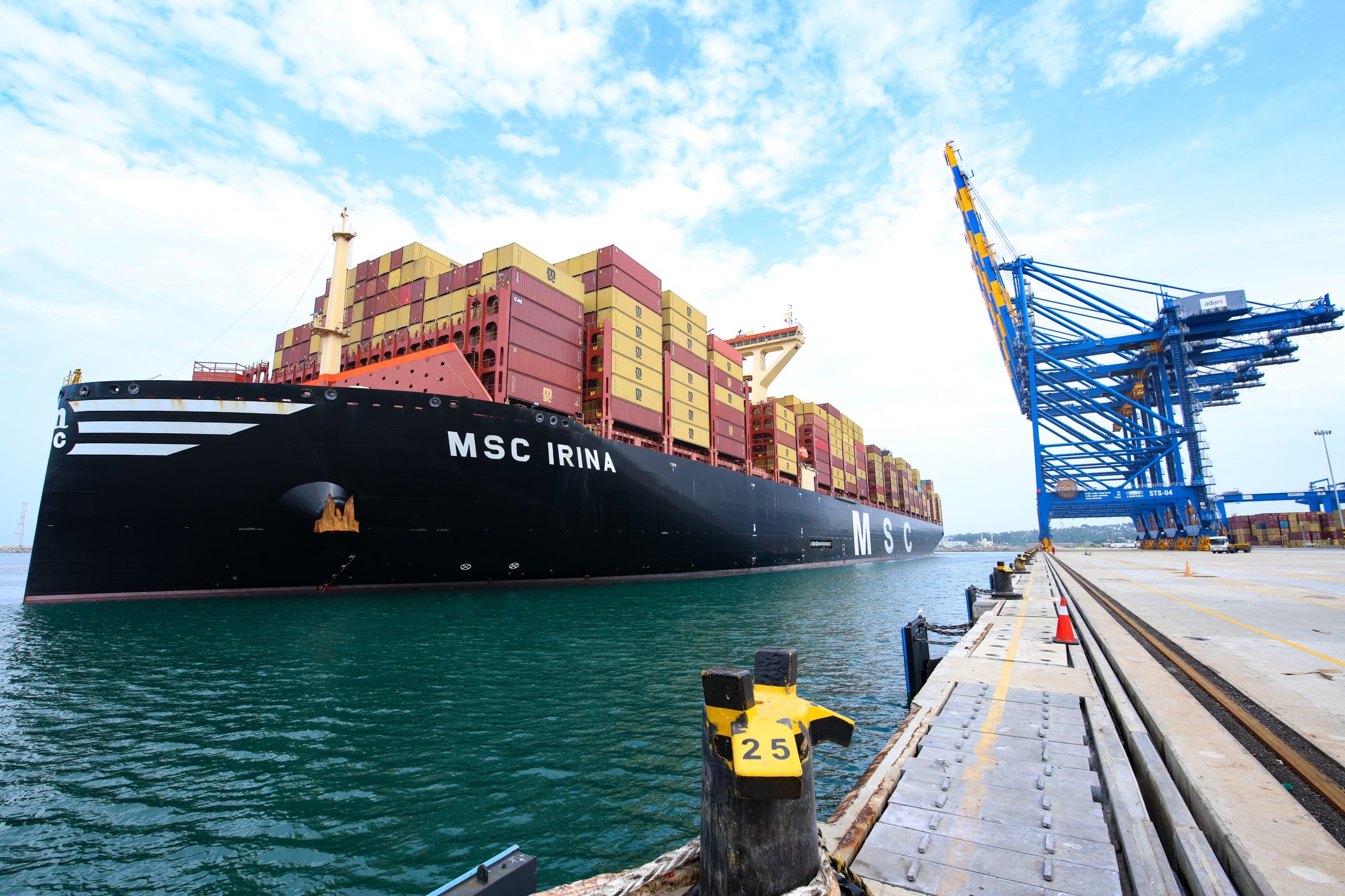
MSC Group’s terminal arm, Terminal Investment Limited, will acquire a 49% interest in Vizhinjam Port (Port of Trivandrum) under a transaction carrying a total deal value of USD 2.85 billion. The agreement is one of the clearest signals yet that Vizhinjam is being positioned as a major long-term hub within MSC’s global shipping network.
Adani Ports and Special Economic Zone Limited, or APSEZ, and MSC Group announced on June 30, 2026, that Terminal Investment Limited, or TiL, had entered into a definitive agreement to invest in a 49% interest in Adani Vizhinjam Port Private Limited.
The transaction values the Vizhinjam port concessionaire at USD 2.85 billion, with the MSC subsidiary investing approximately USD 1.397 billion for its proportionate 49% share. APSEZ described the agreement as the largest foreign private investment in Indian port infrastructure. The transaction remains subject to customary and regulatory approvals.
The scale of the agreement is significant not only for Vizhinjam or Kerala, but for India’s position in global container shipping.
MSC is the world’s largest container shipping group, while TiL operates and invests in a portfolio of more than 100 container terminals across five continents. A direct ownership interest of this scale gives MSC a strong commercial incentive to route additional vessels and cargo through Vizhinjam, expand the port’s role in its global network and support the development of long-term trade volumes.
From a New Port to a Strategic MSC Hub
Vizhinjam has already moved beyond the status of an experimental or emerging terminal.
The port crossed two million TEUs within its first 18 months of operations and welcomed its 1,000th vessel in June 2026. During FY2026, it handled approximately 1.3 million TEUs. It has also received more than 70 ultra-large container vessels and hundreds of ships exceeding 300 metres in length.
These results demonstrate that Vizhinjam can handle the scale, draft requirements and operational demands of modern global container shipping.
Its present container-handling capacity of approximately 1.6 million TEUs is being expanded to around 5.7 million TEUs by 2028. The expansion would make Vizhinjam several times larger than its current configuration and capable of serving substantially greater volumes of transshipment and gateway cargo.
MSC’s investment therefore appears to be about more than buying a minority interest in an existing terminal. It signals confidence in Vizhinjam’s potential to become one of the group’s most important global hubs in its mainline calls.
Positioned Directly on Global Trade Routes
Vizhinjam’s strongest geographical advantage is its location.
The port lies approximately ten nautical miles from the major East–West international shipping route connecting Europe, the Persian Gulf and the Far East. Its proximity allows large vessels to call at the port with comparatively limited deviation from their principal voyage.
Its natural deep-water conditions allow Vizhinjam to accommodate Megamax and other ultra-large container ships without depending on the extensive recurring dredging required at many conventional ports. The port combines a natural draft of approximately 18 to 20 metres with automated container-handling systems, advanced quay cranes, automated yard cranes and an AI-enabled vessel traffic management platform.
Through the services and relay networks calling at Vizhinjam, cargo connects across several of the world’s most important trade regions:
Direct services to New York, Baltimore, Norfolk with MSC's America Service.
Regional Hub for transhipment to Middle East - Salalah Port, Oman.
Regional Hub for transhipment to East Africa with direct connections to Mombasa, Djibouti,
Regional Hub for Indian Ocean trade with services to Tamatawe, Port Louis, Mogadishu.
Direct services to Sines Port, hub for European trade.
Direct services to Vung Tau, Vietnam.
Direct services to Tema, Lome hubs for West African Trade.
Direct services to Brazilian hubs with Carioca Service.
Vizhinjam is therefore positioned not merely as an Indian destination port, but as a transfer point where containers moving between major global corridors can be consolidated, redistributed and connected to regional markets.
What the Deal Means for Importers
For importers, the most important opportunity is not simply the existence of another port. It is the possibility of building more efficient supply chains around a port connected to a major global carrier network.
Importers sourcing goods from China, Southeast Asia or other manufacturing centres could use Vizhinjam as an intermediate gateway before goods continue to destinations in the Gulf, Africa, Europe or the Americas.
This creates a particularly important opportunity for companies whose products require additional processing before reaching their final markets.
Instead of shipping finished consumer-ready goods directly from the manufacturing country, importers may bring bulk or semi-finished products to the Vizhinjam region for packaging, labelling, kitting, assembly, quality inspection, consolidation or market-specific customization.
The goods can then be re-exported through the same international shipping network.
Vizhinjam’s Opportunity Goes Beyond Transshipment
Transshipment alone creates vessel traffic and container volume. However, the larger economic opportunity comes from performing commercial activity on the cargo while it is near the port.
As Vizhinjam develops into a full export-import gateway, businesses around the port can participate in activities such as:
Bonded and non-bonded warehousing
Packaging and repackaging
Product labelling and relabelling
Kitting and multi-product bundling
Light assembly and manufacturing
Inspection and quality control
Sorting and grading
Cold-chain handling
Container freight-station services
Customs clearance and documentation
Cargo consolidation and deconsolidation
Repair, refurbishment and returns processing
Export preparation and destination-market compliance
Vizhinjam International Seaport Limited has identified logistics parks, inland container depots, free-trade warehousing zones, container freight stations, specialized cold-chain facilities and truck terminals as important parts of the emerging gateway ecosystem.
It has also highlighted sectors including food processing, automotive and electric vehicles, chemicals and pharmaceuticals, consumer electronics, engineering equipment, seafood processing, furniture, renewable energy and handlooms as priority areas for port-led industrial development.
These sectors can create demand for a broad network of supporting businesses, from packaging suppliers and warehouse operators to testing laboratories, transport companies, customs agents, equipment providers and specialized processing facilities.
A New Manufacturing and Value-Addition Model
Vizhinjam can support a supply-chain model that sits between conventional importing and full-scale domestic manufacturing.
Consider an importer sourcing liquid consumer products in bulk from Asia. The product could arrive near Vizhinjam in industrial containers and undergo bottling, retail packaging, labelling, quality inspection and export preparation in the surrounding region before being shipped to markets in the Gulf or Africa.
Similarly, components sourced from several manufacturers could be consolidated at Vizhinjam, assembled into retail kits, packed according to destination-market requirements and re-exported as a finished product.
This model can be attractive when final-stage work is labour-intensive, when products must be customized for multiple markets or when performing every operation at the original manufacturing location is operationally difficult.
Potential use cases include:
Retail packaging of bulk products
Country-specific labels and instructions
Promotional bundles and multipacks
Assembly of components from multiple suppliers
Inspection and rework before final delivery
Product localization for different markets
Consolidation of goods from several manufacturers
Regional distribution from a single inventory pool
The presence of a major global shipping group as a strategic investor strengthens the commercial foundation for this ecosystem. Shipping connectivity attracts cargo; cargo attracts logistics and processing businesses; and those businesses, in turn, create more gateway and export volumes for the port.
Opportunities for Kerala, Tamil Nadu and Southern India
The benefits of Vizhinjam’s growth are not limited to businesses located directly beside the terminal.
Kerala and neighbouring regions of Tamil Nadu have established capabilities in food processing, seafood, rubber products, textiles, engineering, automotive components, electronics, chemicals, packaging and light manufacturing.
A high-capacity global port can connect these industries more directly with international markets while also creating opportunities for new businesses serving imported and transshipment cargo.
The emerging ecosystem could support demand for:
Road and rail logistics
Industrial and bonded warehousing
Container handling and maintenance
Packaging-material production
Cold storage
Freight forwarding
Marine services
Ship repair and chandelling
Customs and compliance services
Trade finance and insurance
Software-based cargo visibility
Quality-control and certification services
VISL has outlined plans for approximately 3,500 acres of port-led industrial development across multiple phases and is targeting substantial investment in logistics and industrial activities over the coming years.
A Strong Signal of Long-Term Commitment
Shipping lines choose hubs based on scale, efficiency, location, infrastructure and their ability to generate consistent cargo volumes.
MSC’s decision to participate directly in Vizhinjam’s ownership materially changes the port’s strategic position. The carrier is no longer only a customer calling at the terminal; it is becoming a long-term investor in its growth.
That alignment can give Vizhinjam better visibility into future container volumes, encourage the introduction of additional services and strengthen the port’s position within MSC’s wider network.
APSEZ has stated that the partnership is expected to improve volume visibility, accelerate the port’s ramp-up and deliver greater supply-chain efficiencies across global markets.
A USD 2.85 billion valuation and a USD 1.397 billion investment by the terminal arm of the world’s largest container shipping group represent an unusually strong vote of confidence.
For importers and global businesses, the message is increasingly clear: Vizhinjam is developing into more than a place where containers change ships. It has the potential to become a platform for sourcing, value addition, regional distribution and access to some of the world’s fastest-growing markets.
For companies preparing their next generation of supply chains, this may be the right time to begin evaluating how Vizhinjam can fit into their global trade strategy.