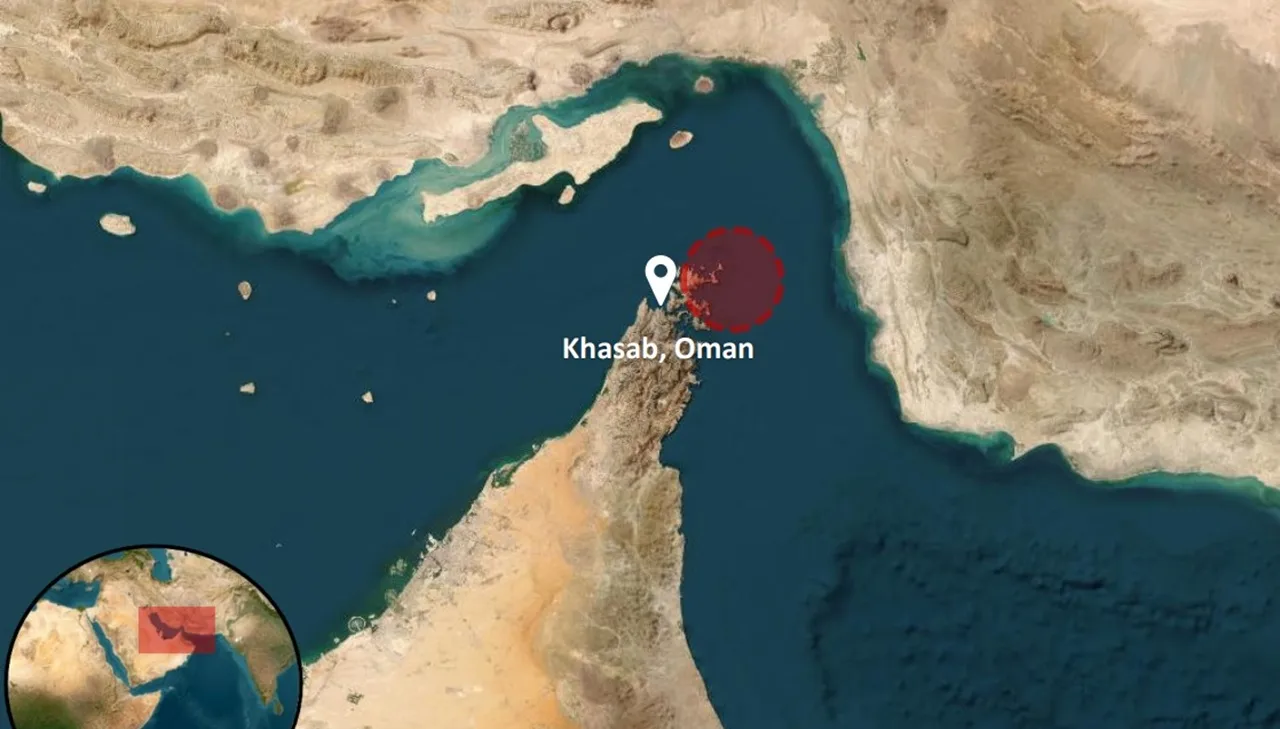
A tanker was struck by three unknown projectiles while sailing out of the Strait of Hormuz on August 31, in the latest incident to raise concerns over the safety of commercial shipping in the region.
According to the UK Maritime Trade Operations (UKMTO), the vessel reported being hit during the final stages of its outbound transit, approximately 17 nautical miles east of Khasab, Oman. No casualties or environmental impact were reported, and authorities are investigating the incident. UKMTO has advised vessels operating in the area to maintain caution and report suspicious activity.
The tanker has not been publicly identified, and the initial UKMTO reporting does not establish who launched the projectiles. That distinction is important as the security situation around the Strait of Hormuz remains highly fluid, with commercial vessels facing risks from military operations, interdictions and attacks involving unidentified projectiles.
Another incident in an already disrupted shipping corridor
The latest strike follows several tanker incidents in and around the Strait during August.
On August 24, the Liberian-flagged Aframax Metro Venetian was struck by an unknown projectile in the Omani route of the Strait. The attack caused damage in the engine room and disabled the vessel, although its crew remained safe and no environmental impact was reported at the time. A second tanker, Al Salam II, was struck the following day, with a resulting fire extinguished by the crew. Another tanker was reported hit on August 29 while transiting inbound near Khasab.
The concentration of incidents has reinforced concerns among shipowners and charterers over the reliability of transit through one of the world's most important maritime chokepoints.
That concern is already visible in vessel movements. Preliminary Kpler data cited by Reuters showed only five commodity vessels transited the Strait on August 31, compared with a 10-day average of around 14. Notably, no liquid tankers were recorded among those five transits.
Why Hormuz matters to global trade
The Strait of Hormuz connects the Persian Gulf with the Gulf of Oman and the Arabian Sea and provides the primary maritime route for oil and petroleum products leaving the Gulf.
The U.S. Energy Information Administration estimates that oil flows through the Strait averaged about 20.9 million barrels per day in the first half of 2025, equivalent to roughly 20% of global petroleum liquids consumption and about one-quarter of globally traded oil moved by sea. Existing pipeline alternatives through Saudi Arabia and the UAE can bypass only part of that volume.
As a result, even incidents that do not immediately interrupt cargo flows can have wider consequences. Shipowners may delay voyages, alter routing decisions, seek additional security measures or reassess whether the commercial returns of a Gulf voyage justify the associated risks.
The impact is already extending into energy markets. Reuters reported on September 1 that renewed U.S.-Iran military exchanges pushed Brent crude higher, while shipping activity through the Strait remained far below normal levels.
Security risks remain a shipping issue, not only an energy issue
The consequences are broader than oil prices.
For shipping companies, prolonged uncertainty can increase war-risk insurance costs, affect vessel deployment and create delays for cargoes moving into and out of Gulf ports. Reduced vessel productivity can also place upward pressure on freight and chartering costs as operators require additional time, routing flexibility or vessels to maintain the same level of service.
The International Maritime Organization has repeatedly warned about the human and operational risks facing ships in the region. In a statement issued on August 28, the IMO said at least 70 attacks on international shipping had been verified since the current conflict began on February 28, with 19 seafarers killed. The organization has called for practical measures to restore freedom of navigation and emphasized that seafarer safety must remain the overriding priority.
The IMO Council has also reaffirmed that transit passage through international straits must not be threatened, impeded or suspended, while condemning attacks on civilian commercial ships in and around the Strait of Hormuz.
What comes next for Gulf shipping
The immediate question for the industry is whether the latest incident remains an isolated attack or becomes part of a sustained pattern that further suppresses vessel traffic.
Recent data suggests operators are already adapting. Saudi Aramco has increased the use of ship-to-ship transfers outside the Strait, including operations near Fujairah and Sohar, as companies seek greater flexibility amid continuing security concerns.
At the same time, renewed U.S.-Iran military activity around the Strait has added another layer of uncertainty. U.S. forces struck Iranian positions on Larak Island on August 30, with Washington saying the operation targeted capabilities associated with potential mine-laying. Iran subsequently carried out retaliatory attacks against U.S. positions in the region, further complicating the maritime security environment.
For commercial shipping, the latest tanker strike is therefore significant not because it has caused a major spill or loss of life, but because it adds another warning signal to an already fragile operating environment.
Until there is greater confidence in the security of the transit corridor, shipping lines, tanker operators, cargo owners and insurers are likely to continue treating Strait of Hormuz movements as a high-risk operational decision rather than a routine passage.