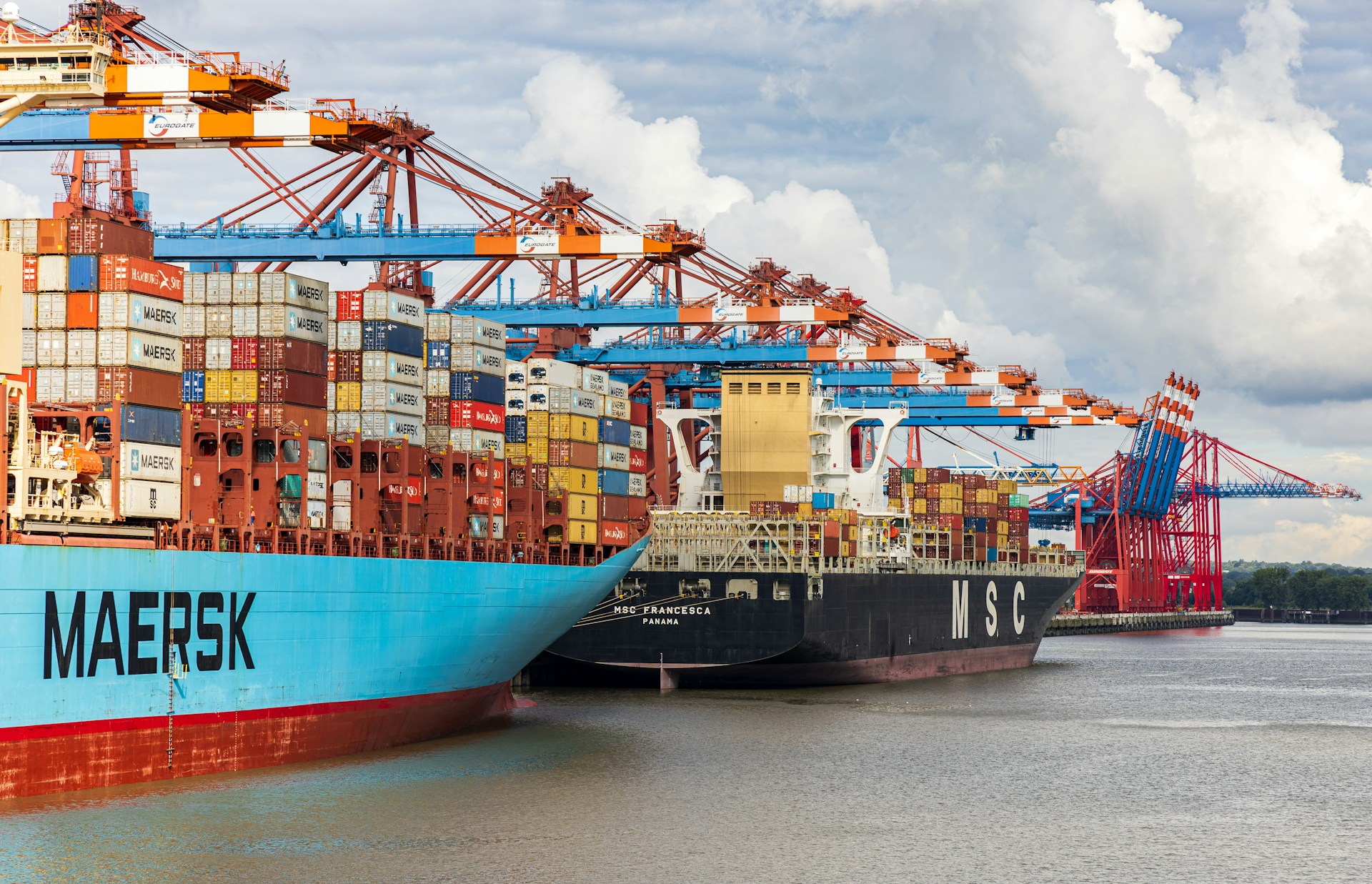
For most importers, the supply chain has traditionally followed a simple model: manufacture the product at origin, finish everything there, load the container and ship the completed goods to the destination market.
That model is convenient. It is not always the most economical.
A UAE importer sourcing from China, Thailand or Vietnam may be paying the factory to package, label, assemble and prepare every unit before shipment. A European importer may be doing the same work in Asia, even when packaging materials, components or labour could be sourced more competitively elsewhere. Alternatively, those activities may be postponed until the cargo reaches Dubai, Saudi Arabia or Europe, where warehousing and processing costs can be considerably higher.
Port-based value addition offers a third option.
Instead of treating a transshipment location as simply a place where a container moves from one vessel to another, importers can build a supply chain in which selected cargo processing takes place around the port before the goods continue to their final market.
India's Vizhinjam International Seaport creates an especially interesting location for this model.
What is port-based value addition?
Port-based value addition means carrying out activities that increase the commercial readiness, usability or value of cargo at or near a port during its journey from supplier to final market.
Depending on the product and customs structure, these activities can include:
Packaging and repacking
Labelling and relabelling
Kitting and bundling
Light product assembly
Bulk-to-retail conversion
Quality control and cargo inspection
Sorting and grading
Palletization
Product customization
Multi-supplier consolidation
Adding components sourced from another country
Destination-specific packaging
Managed warehousing and inventory buffering
The important idea is that the importer does not have to accept the finished configuration chosen at the manufacturing origin.
The cargo can leave the factory in the format that is most economical for transportation or production, undergo further processing at an intermediate logistics hub, and then continue to the destination market in its final form.
This is sometimes described through concepts such as value-added logistics, postponement logistics, late-stage customization, cargo transformation and port-centric logistics. Port-based value addition combines these ideas around a strategic maritime hub.
Why India's Vizhinjam International Seaport matters
Vizhinjam International Seaport is India's first deep-water container transshipment port. It sits near the southern tip of India, only around 10 nautical miles from the major international shipping route linking the Far East, Persian Gulf and Europe. The port has a natural deep draft and has been designed around large mainline container vessels.
That location changes the economics.
Consider cargo moving from manufacturing centres in China or Southeast Asia towards the UAE or Europe. Southern India lies close to the broader east-west maritime flow the cargo is already following.
Vizhinjam port therefore has the potential to become more than a container transfer point. It can support an ecosystem of warehousing, logistics and cargo-related activities around a major transshipment hub. Vizhinjam International Seaport Limited itself identifies logistics centres, warehousing zones and related port-led development among the opportunities surrounding the project.
For importers, the question becomes:
If cargo is already moving past southern India, which activities really need to be completed at the original factory?
The answer can reveal significant savings.
How port-based value addition can reduce import costs
The opportunity is not simply about finding cheaper labour. The strongest business cases usually combine several types of savings.
1. Move labour-intensive work away from expensive locations
Activities such as labelling, repacking, sorting, kitting, inspection and simple assembly require labour.
Completing them in a high-cost destination market can unnecessarily increase the landed cost of every unit.
A UAE distributor, for example, may receive imported goods in bulk and then use a Dubai warehouse to create retail packs. A European importer may bring semi-finished goods into the EU before carrying out final assembly or market-specific preparation.
Where the product and customs structure allow it, doing that work in India before final shipment may provide a lower-cost alternative.
The calculation should always be made per unit and per container, rather than comparing hourly labour rates alone.
A saving of only $0.08 per unit across 40,000 units equals $3,200 per container. At sufficient volume, seemingly small changes in processing cost become commercially important.
2. Source packaging and components from India
Labour is only one part of the opportunity.
An importer purchasing a finished product from an overseas OEM often allows that OEM to source bottles, cartons, inserts, labels, accessories and other secondary components.
The importer may pay both the supplier's cost and the supplier's markup.
Port-based value addition allows the supply chain to be separated.
The main product could come from Thailand or China, while cartons, plastic packaging, printed materials, simple components or accessories are sourced from India and combined with the cargo before re-export.
This creates India sourcing arbitrage.
For some products, savings from locally sourced inputs can matter more than the difference in labour cost.
3. Ship products in a more efficient format
Factories often export products in their final retail configuration.
That can mean transporting packaging material, empty space and bulky retail cartons for thousands of kilometres.
In suitable categories, an importer may instead ship the product in bulk or semi-finished form and perform bulk-to-retail conversion closer to the destination market.
For example:
Factory in Asia → bulk cargo → Vizhinjam, India → filling/packing/labelling → UAE
If bulk transportation increases the number of sellable units carried within the same container footprint, the importer can gain from both processing savings and better freight utilisation.
This will not work for every product. But where retail packaging substantially increases volume, the economics can be powerful.
A UAE importer example
Consider a UAE private-label company purchasing a household product from a Southeast Asian manufacturer.
Under the conventional model:
Manufacturer → finished retail product → UAE warehouse → distribution
The manufacturer supplies the product, bottle, label, carton and final packaging. The UAE importer pays the manufacturer's packaging cost and any markup built into it.
A port-based value addition model could instead look like:
Manufacturer → bulk or semi-finished product → Vizhinjam, India → packaging + Arabic labelling + QC → UAE → distribution
CapeTerminal could coordinate the receiving, storage, packaging vendors, inspection, inventory records and dispatch around Vizhinjam port.
The potential benefit is not one single saving. It can come from several layers:
Lower processing cost
Indian packaging procurement
Reduced OEM packaging markup
Better container utilisation
Independent quality inspection before final shipment
Less destination-side processing
Ability to change packaging later in the supply chain
This is why evaluating port-based value addition only by comparing labour rates misses much of the opportunity.
Cargo Savings Estimator: Calculate whether your cargo could save money through Vizhinjam Port
Why European importers should consider the same model
For European importers, the value proposition can be slightly different.
Labour savings remain relevant, but late-stage localisation, component sourcing and supply-chain flexibility can become equally important.
Imagine a European company buying the same core product for several markets.
Traditionally, the Asian factory might produce separate inventory for each destination:
One packaging version for Germany
Another for France
Another for Spain
Different inserts or accessories for other markets
That requires the importer to decide the final product mix early.
Instead, the company could manufacture a larger quantity of a common base product, move it to India and perform selected final configuration later.
This is late localization or postponement.
The importer delays irreversible packaging or configuration decisions until closer to the point at which actual demand is known.
The result can be lower inventory fragmentation and greater flexibility when demand changes between markets.
Any labelling, certification or product-compliance requirements must, of course, be checked for the relevant destination and product category before processing.
Consolidate suppliers from multiple countries
Port-based value addition becomes even more interesting when the finished product depends on several suppliers.
A business may source:
A core product from China
Accessories from Vietnam
Packaging from India
Printed materials from India
Additional components from another supplier
Without consolidation, coordinating these suppliers can create multiple shipments and fragmented inventory.
A consolidation point in India allows components to be brought together, checked, assembled or kitted, and exported as a single finished commercial unit.
For example:
China + Vietnam + India → Vizhinjam consolidation and assembly → UAE or Europe
This turns the port region into a supply-chain assembly point, rather than simply another stop on a shipping route.
For importers trying to diversify beyond a single manufacturing country, that can become particularly useful.
Quality control before the cargo reaches your market
Problems discovered after cargo arrives at destination are expensive.
By then, the importer may already have incurred international freight, destination handling, customs-related expenses, warehouse charges and internal logistics costs.
Adding a quality-control stage before final export provides another checkpoint.
Depending on the cargo, this could include quantity verification, packaging checks, photographic inspection, sampling, visual inspection, damage reporting or checking the completed value-addition work against an agreed specification.
For companies purchasing from multiple overseas vendors, an independent QC layer can also provide greater visibility over what is actually being shipped.
CapeTerminal coordinates cargo inspection and quality-control workflows around Vizhinjam port so importers can maintain records of cargo condition and processing before onward dispatch.
Managed warehousing makes the model practical
The challenge for an overseas importer is not simply finding a warehouse in India.
It is managing everything that happens around it.
A shipment may involve a warehouse operator, packaging company, labour contractor, transporter, inspection agency, customs broker, freight forwarder and several suppliers.
Coordinating each party independently from Dubai, Abu Dhabi, Riyadh, London or another European market can quickly remove the convenience that the cost-saving model was supposed to create.
That is where managed warehousing becomes different from renting storage space.
CapeTerminal acts as the coordinating layer between the importer and the local operating network. Receiving, storage, inventory visibility, cargo processing, QC and dispatch can be managed through one accountable workflow rather than through a collection of disconnected vendors.
Learn about CapeTerminal Managed Warehousing at Vizhinjam port
India also has customs structures for value-added warehousing
Port-based processing has to be designed around the correct customs and regulatory structure. Cargo cannot simply be removed from a transshipment container and processed without considering its customs status.
India does, however, provide formal mechanisms for manufacturing and other operations involving imported goods in approved warehouses. Under Section 65 of the Customs Act and the MOOWR framework, permitted private warehouses can undertake manufacturing and other operations on warehoused goods, subject to licensing, customs procedures and applicable conditions. The framework also contemplates resultant goods being exported or cleared for Indian home consumption.
The appropriate model depends on the commodity, origin, destination, processing activity and facility being used.
Importers should therefore evaluate the commercial model and customs model together before moving cargo.
When does port-based value addition make sense?
The best candidates generally have one or more of these characteristics:
Large numbers of units per shipment
Significant packaging or assembly cost
Bulky retail packaging that can be added later
Products requiring destination-specific labelling
Multiple components or suppliers
Packaging or components that can be sourced competitively from India
Expensive processing at the destination
A need for independent QC before final shipment
Multiple destination markets using a common base product
Inventory that benefits from postponing final configuration
It is particularly worth examining for private-label products, household goods, consumer products, hardware, accessories, components, promotional kits, home products and other containerised goods involving repeatable value-addition work.
When may it not make sense?
Adding another processing stage should never be done simply because Vizhinjam port is geographically convenient.
A direct factory-to-destination shipment may still be better where volumes are small, the factory performs the work extremely cheaply, extra handling creates unacceptable risk, processing would cause excessive dwell time, or the customs and regulatory treatment makes the route uneconomical.
Highly regulated, temperature-sensitive, hazardous or specialised products also require separate assessment.
The goal is not to route every shipment through India.
The goal is to identify cargo where the savings and strategic benefits exceed the additional handling and logistics cost.
Calculate the economics before changing your supply chain
The right way to evaluate port-based value addition is to model the complete landed-cost difference.
Start with:
Current model
Origin manufacturing + packaging + origin handling + freight + destination processing + warehousing
Then compare it with:
Indian Vizhinjam model
Origin manufacturing + freight to Vizhinjam port + local handling + value addition + warehousing + onward freight + destination handling
Include per-unit packaging costs, supplier markups, labour, additional materials, container utilisation, storage and handling.
A few cents per unit may appear insignificant. Multiplied across tens of thousands of units in a container and repeated over dozens or hundreds of containers per year, the result can be substantial.
Use the CapeTerminal Cargo Savings Estimator
Vizhinjam can be more than a transshipment port
Vizhinjam International Seaport gives India something it has not previously had at this scale: a deep-water transshipment hub positioned directly beside one of the world's major east-west shipping corridors. Official port material describes the location as approximately 10 nautical miles from the shipping route connecting Europe, the Persian Gulf and the Far East.
For global importers, the larger opportunity is what can develop around that connectivity.
A container does not necessarily have to leave its origin factory as a completely finished retail product.
Packaging can happen later. Components can come from India. Products can be inspected before final shipment. Multiple suppliers can be consolidated. Market-specific variants can be created closer to demand. Inventory can be buffered between source and destination.
That is the real opportunity behind port-based value addition at Vizhinjam port.
For UAE and European importers sourcing from Asia, Vizhinjam port creates another point at which the supply chain can be redesigned - not merely another port through which the container passes.
And when the economics work, that intermediate step can reduce the final cost of getting each sellable unit into the customer's market.
Frequently asked questions about port-based value addition
What is port-based value addition?
Port-based value addition is the process of carrying out activities such as packaging, labelling, kitting, assembly, sorting, quality inspection or consolidation at or near a port before cargo continues to its final destination. It allows importers to separate manufacturing from the final preparation of a product.
Why is India's Vizhinjam port suitable for port-based value addition?
Vizhinjam International Seaport is located in southern India close to the main east-west shipping route connecting the Far East, Persian Gulf and Europe. Its location as a deep-water transshipment hub makes the surrounding region strategically relevant for cargo moving between Asian manufacturing markets, the GCC and Europe.
How can UAE importers use Vizhinjam Port?
A UAE importer could potentially source cargo from Asia, perform selected packaging, assembly, labelling, QC, consolidation or warehousing activities in India, and then ship the processed goods onwards to the UAE. The exact route and customs structure should be evaluated for each cargo type.
How can European importers use Vizhinjam Port?
European importers can evaluate Vizhinjam for activities such as late-stage packaging, kitting, supplier consolidation, Indian component sourcing, quality control and creation of destination-specific product variants before goods continue to Europe.
Can imported cargo be processed in India and then re-exported?
India has customs frameworks under which approved warehouses may undertake manufacturing and other operations involving warehoused imported goods, subject to licensing and applicable customs requirements. The correct procedure depends on the commodity, facility and proposed operation and should be confirmed before shipment.
How do I know whether processing cargo at Vizhinjam port will actually save money?
Compare the complete cost of your existing supply chain with the proposed Vizhinjam route on a per-container and per-unit basis. Include freight, handling, warehousing, processing, packaging, supplier markups, materials and onward transportation rather than looking at labour cost alone.