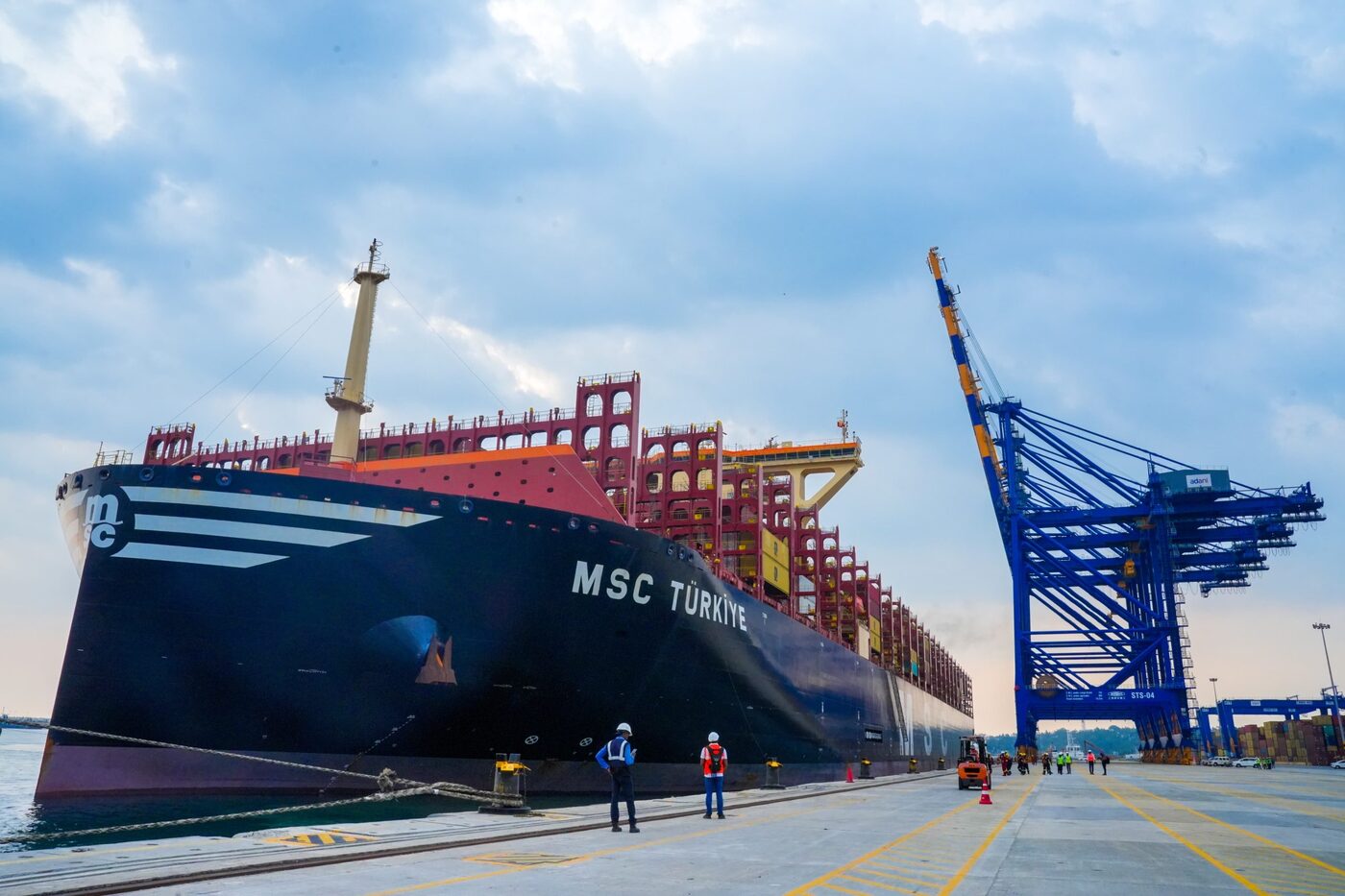
India's Vizhinjam International Seaport is creating opportunities far beyond container handling. As vessel traffic, gateway cargo and port-linked investment increase, businesses will be needed to move cargo, maintain equipment, support ships, manage documentation and prepare products for destination markets.
Vizhinjam’s location is central to this opportunity. The port lies close to the main East–West international shipping route and has the natural depth required to accommodate ultra-large container vessels.
The wider development vision for Vizhinjam includes logistics parks, container freight stations, inland container depots, free trade warehousing zones, cold-chain facilities, maritime services and cargo-processing industries.
Not every port-related business will succeed immediately. Some opportunities depend on the growth of gateway import and export cargo, industrial development and stronger hinterland connectivity. Others can begin by serving the demand already created by vessels, shipping companies, transporters, contractors and cargo owners.
What is port based value addition?
Port based value addition means performing commercially useful work on cargo at or near a port before it continues to another market.
Instead of merely transferring a container from one vessel to another, businesses can inspect, sort, package, label, assemble, consolidate or otherwise prepare goods for their final destination.
Common port based value addition services include:
Repacking bulk goods into retail units
Applying destination-market labels
Combining products from multiple suppliers into kits
Conducting quality inspections
Replacing damaged packaging
Palletizing and securing cargo
Filling or bottling products
Performing light assembly
Preparing goods for re-export
For Vizhinjam, port based value addition can connect international shipping access with the manufacturing, labour and supplier capabilities available across Kerala and southern Tamil Nadu.
The following are 20 businesses and services that could grow around the Vizhinjam port economy.
Logistics and cargo movement opportunities
1. Freight forwarding and shipment coordination
Freight forwarders coordinate cargo movement between exporters, shipping lines, customs brokers, transporters, warehouses and final buyers.
A freight forwarding business near Vizhinjam can handle import and export bookings, feeder connections, re-export movements, cargo consolidation and multimodal transport. Smaller operators may begin as shipment coordinators before developing direct relationships with shipping lines.
A particularly strong opportunity lies in managing cargo that arrives through Vizhinjam for processing, redistribution or onward shipment to GCC, African, European and other international markets.
2. Customs clearance and trade documentation
International cargo generates substantial documentation. Importers and exporters need support with customs declarations, bills of entry, shipping bills, certificates, cargo classification and regulatory submissions.
Customs brokers and trade-documentation specialists can serve cargo owners unfamiliar with Indian procedures. Businesses can also offer document verification, shipment-readiness checks and coordination between customs, warehouses and freight forwarders.
This is a knowledge-intensive service that requires less physical infrastructure than warehousing or transport.
3. Container trucking and drayage
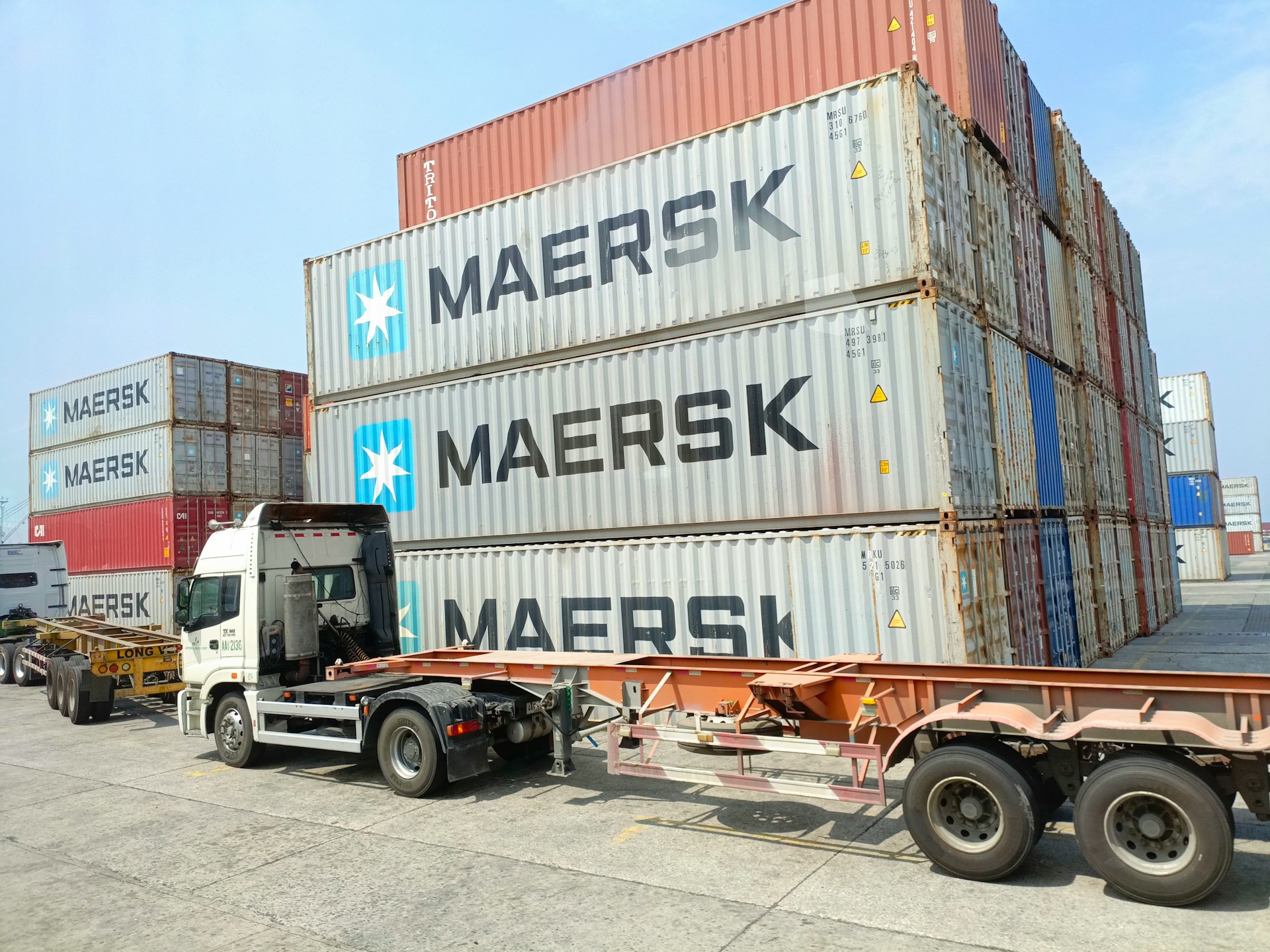
Containers must move between the port, warehouses, container freight stations, processing facilities and customer locations.
This creates demand for container trailers, short-distance drayage, scheduled port pickups and specialized transportation. Operators need dependable vehicles, trained drivers, permits, tracking systems and clear procedures for handling port documentation.
With the start of EXIM cargo, thousands of containers will need to be transported every day to and from the port. That means tens of thousands of specialized container trucks need to be plying on the roads. These type of specialized container trucks (20ft and 40ft) are not very common in India and it needs new investment. Even a single such truck can get guaranteed work for early movers since thousands of TEUs will move as gateway cargo every day.
Businesses do not necessarily need to own a large fleet. A technology-enabled transport coordinator can aggregate independent truck operators and provide cargo owners with reliable capacity.
Common container capable truck options include the Ashok Leyland AVTR 1920 and 2620, Tata Signa and Tata Prima models, and BharatBenz heavy-duty tractor-trailers.
A new tractor unit suitable for container haulage may cost approximately ₹27 lakh to more than ₹50 lakh, depending on the specifications.
4. Container freight stations and cross-docking centres
Container freight stations support cargo consolidation, deconsolidation, customs examination, temporary storage and related handling.
Cross-docking centres follow a simpler model. Cargo is transferred quickly from inbound containers to outbound vehicles or containers without being stored for long periods.
These facilities can become increasingly important as gateway cargo through Vizhinjam grows. They require suitable land, container access, material-handling equipment, security and relevant approvals.
5. General warehousing and distribution
Demand for warehouses near Vizhinjam could come from importers, exporters, distributors, freight forwarders and port based value addition companies.
Opportunities include short-term cargo storage, pallet storage, fulfilment, inventory management and regional distribution. Warehouses with good highway access may serve both port cargo and the wider Thiruvananthapuram market.
Operators should evaluate locations based on truck access, travel time from the port, land cost, drainage, power supply and expansion potential rather than proximity alone.
6. Bonded warehousing and re-export support
A bonded warehouse allows eligible imported goods to be stored under customs control without immediate payment of import duty.
This can be useful for cargo intended for re-export, deferred domestic clearance or approved processing activities. A bonded warehouse near Vizhinjam could support international traders that want to hold inventory closer to GCC, African and Indian Ocean markets.
Bonded warehousing is compliance-heavy. Operators need strong customs procedures, inventory controls, security systems and experienced professionals.
CapeTerminal provides legal and regulatory help in setting up Bonded warehousing as well as operations with CapeTerminal's automated software platform.
7. Cold storage and reefer logistics
Seafood, meat, fruits, vegetables, dairy products, pharmaceuticals and other temperature-sensitive goods require uninterrupted cold-chain handling.
Business opportunities include cold-storage warehouses, reefer-container monitoring, pre-cooling, frozen distribution, temperature logging and emergency reefer support.
A cold-storage facility near Vizhinjam should be designed around specific commodity requirements. Frozen seafood, pharmaceuticals and fresh produce have different temperature, hygiene and certification needs.
Container and cargo-support businesses
8. Container repair, cleaning and depot services (Empty Container Yards)
Shipping containers require inspection, washing, structural repairs, floor replacement, painting and certification before they can be reused.
A container depot can provide storage, empty-container handling, repair estimates and condition reporting. Specialized services may also be required for refrigerated containers, tank containers and containers carrying food-grade products.
Since yard space is a main limiting factor for such a large port, empty containers will be often offloaded to nearby 'Empty container yards' to ease load on the port yards.
Hence demand will depend on shipping-line arrangements and the volume of empty containers positioned in the region.
9. Material-handling equipment rental
Warehouses and processing facilities need forklifts, pallet trucks, reach stackers, cranes, dock levellers and other material-handling equipment.
Many smaller operators prefer renting equipment instead of purchasing it. This creates opportunities for short-term rentals, equipment leasing, operators on demand and maintenance contracts.
A local equipment provider that can respond quickly to breakdowns may be more valuable than a distant supplier offering a lower daily rate.
10. Cargo inspection, surveying and quality control
Importers need independent confirmation that goods have arrived in the expected quantity and condition.
Cargo-survey companies can provide container inspections, tallying, damage assessments, sampling, weight verification and photographic reports. Quality-control providers can inspect products before repacking, assembly or re-export.
This service is especially important for port based value addition, where responsibility must be clearly recorded before and after every processing stage.
CapeTerminal provides tools for Quality Control service providers to streamline their operations and reducing inspection errors.
11. Product testing laboratories and certification services
Manufacturers, importers and exporters need reliable testing to confirm that products meet buyer specifications, safety requirements and destination-market regulations before shipment.
Testing facilities near Vizhinjam can serve food, seafood, chemicals, packaging, textiles, engineering products, electronics, batteries and other cargo moving through the port. Services may include microbiology, residue testing, material analysis, product safety testing, packaging validation, batch testing and pre-export quality checks.
Certification and conformity-assessment providers can complement these laboratories by helping businesses obtain the documentation and approvals required for domestic sale or international export. As port based value addition grows around Vizhinjam, local testing and certification can reduce turnaround time by allowing products to be processed, tested, approved and shipped through the same logistics corridor.
Port based value addition businesses
12. Packaging and contract packing
Packaging is one of the most practical value addition businesses near a container port.
Imported goods may arrive in bulk cartons, sacks, drums or intermediate packaging and need to be converted into retail-ready units. Services can include pouch packing, carton packing, shrink wrapping, palletisation and export packing.
A packaging facility near Vizhinjam could serve importers that want products prepared for GCC, African or Indian retail markets without returning them to the original manufacturer.
13. Labelling, barcoding and compliance packaging
Products often require different labels for each destination market.
A labelling service can apply importer details, Arabic or multilingual labels, barcodes, batch numbers, expiry dates, country-of-origin information and market-specific compliance statements.
This is a relatively accessible port based value addition opportunity. It can be combined with inspection, packaging and inventory services to create a complete market-readiness operation.
14. Kitting, bundling and product consolidation
Kitting involves combining multiple products or components into a single saleable unit.
An importer may source bottles from one supplier, dispensers from another and printed cartons from a third. Instead of asking each manufacturer to coordinate the final product, the components can be consolidated near Vizhinjam and assembled into finished kits.
Other examples include promotional bundles, tool kits, spare-parts sets, gift packs and e-commerce combination products.
15. Light assembly and finishing
Some products do not require full-scale manufacturing but still need assembly, fitting or finishing before sale.
Potential services include attaching accessories, installing simple components, inserting instruction manuals, conducting functional checks and preparing finished retail packs.
The feasibility of each activity depends on customs treatment, product regulations and facility approvals. Businesses should begin with repeatable processes that have clear quality standards rather than attempting complex manufacturing immediately.
16. Bottling, filling and private-label production
Bulk liquids and powders can sometimes be transported more efficiently than individually packaged retail products.
A suitable facility could fill edible oils, cleaning products, personal-care products or other permitted goods into retail containers. Services may include bottle sourcing, filling, capping, labelling, batch coding and carton packing.
Food, cosmetics, chemicals and pharmaceutical products each require different licences and production controls. Operators should specialise in a clearly defined product category.
17. Food and seafood processing
Food processing and seafood processing are natural opportunities within a port-led industrial ecosystem.
Potential businesses include grading, cleaning, freezing, portioning, packing and export preparation. Facilities could serve Kerala’s existing seafood industry while using Vizhinjam’s shipping connectivity for international distribution.
Food-processing businesses need reliable cold chains, traceability, hygiene controls, testing systems and destination-market certifications.
18. Industrial scrap management and recycling
All the above port based value addition can generate packaging waste, damaged materials, rejected products, pallets, plastic film, cartons and other industrial by-products. These can be procured as scrap from facilities.
Licensed waste-management companies can support warehouses, packaging facilities and processing units by collecting, segregating, recycling and safely disposing of this waste. Providers with experience in hazardous materials, food waste, plastics, paper, wood and liquid waste can become important partners in keeping cargo transformation compliant, traceable and environmentally responsible.
Maritime and vessel-support opportunities
19. Ship chandelling and marine supplies
Ships require food, drinking water, safety equipment, cleaning materials, tools, spare parts and other supplies while in port.
Ship chandlers source and deliver these items within strict vessel schedules. A missed delivery window can delay a ship or cause an order to be cancelled.
Successful operators need dependable suppliers, port-access procedures, rapid procurement capabilities and experience with maritime documentation.
20. Shipping agency and crew-support services
Shipping agents represent vessel owners and operators while a ship is at port.
Their work can include berth coordination, documentation, customs and immigration liaison, crew changes, medical assistance and local procurement. Related businesses can provide crew transport, accommodation, travel arrangements and emergency support.
This is a relationship-driven business that requires availability outside ordinary working hours.
21. Ship repair and marine engineering
Large vessels and harbour craft require mechanical, electrical, hydraulic and structural maintenance.
While major ship repairs need dedicated infrastructure, smaller businesses can provide riding squads, welding, electrical troubleshooting, pump repair, marine electronics and spare-part supply.
As the maritime ecosystem grows, opportunities may also emerge in ship lay-by services, planned maintenance and specialised marine engineering.
Technology and workforce opportunities
22. Port technology, cargo tracking and compliance software
Businesses operating around Vizhinjam will need systems to track containers, documents, inventory, service orders and processing stages.
Software opportunities include transport-management platforms, warehouse-management systems, digital proof of delivery, customs-document workflows and client shipment dashboards.
Port based value addition creates a particularly important technology requirement: recording the chain of custody and showing what happened to cargo at every stage.
Systems can connect inspection photographs, QR codes, quality checks, labour records and outbound shipment documents into one auditable workflow.
Which Vizhinjam business opportunities are easiest to enter?
The right opportunity depends on available capital, industry experience and access to customers.
Lower-capital opportunities include freight coordination, trade documentation, cargo surveying, software, recruitment and maritime procurement.
Medium-capital opportunities include packaging, labelling, kitting, equipment rental, container cleaning and local distribution.
Higher-capital opportunities include bonded warehouses, cold-storage facilities, container freight stations, processing plants, bunker infrastructure and large repair facilities.
New businesses should generally avoid investing heavily specialised equipment before validating customer demand. In many cases, it is safer to begin as a service coordinator using partner facilities and invest in infrastructure after recurring volumes are secured.
How businesses can prepare for the Vizhinjam port economy
A business planning to operate around Vizhinjam should begin with a specific customer and operational problem.
The next step is to identify:
Who will buy the service
Whether port access is required
Which licences and insurance policies apply
What equipment and workforce are needed
How demand changes with cargo volume
Which services can initially be delivered through partners
How service quality and chain of custody will be documented
The strongest companies will not simply be located near the port. They will solve a specific problem more reliably than existing providers.
Frequently Asked Questions
What are the best businesses to start near Vizhinjam port?
Practical options include freight forwarding, container transport, warehousing, cargo inspection, packaging, labelling, equipment rental, ship supplies and trade-documentation services. The best choice depends on customer access, available capital and industry experience.
What is port based value addition at Vizhinjam?
Port based value addition refers to processing cargo near Vizhinjam before it is distributed or re-exported. It can include packaging, labelling, kitting, sorting, quality inspection, light assembly, filling and consolidation.
Does a port-related business need to be located inside Vizhinjam port?
No. Many businesses can operate outside the port while serving cargo and maritime customers. Warehouses, processing facilities, truck yards, equipment workshops and offices can be located in nearby industrial areas when road access and response times are suitable.
Can small businesses benefit from Vizhinjam International Seaport?
Yes. Not every opportunity requires a warehouse or large fleet. Small businesses can provide documentation, inspection, recruitment, equipment maintenance, marine supplies, packaging and technology services.
Which opportunities depend on gateway cargo?
Warehousing, domestic distribution, customs clearance, container freight stations, cold-chain logistics and large-scale processing are more dependent on imports and exports moving through Vizhinjam. Ship chandelling and vessel-support services are more directly linked to vessel calls.
How can international clients find businesses around Vizhinjam?
Providers can build relationships with freight forwarders, shipping agents, cargo owners, warehouse operators and processing companies. They can also list their capabilities on specialised platforms such as CapeTerminal, respond to procurement opportunities and publish clear information about the cargo, locations and service standards they support.
Building a business around cargo, not only the port
Vizhinjam’s business potential will not come only from containers being transferred between ships.
The wider opportunity lies in the services performed around those containers: transport, storage, inspection, documentation, maintenance, packaging and product preparation.
Port based value addition is particularly important because it creates economic activity from cargo before that cargo reaches its final market. Businesses that combine international logistics access with reliable local execution can become part of a much larger trade network.
CapeTerminal is building a searchable network of facilities, logistics providers and port-related services around Vizhinjam. Businesses preparing to enter this market can use the platform to understand the ecosystem, identify partners and make their capabilities visible to cargo owners.